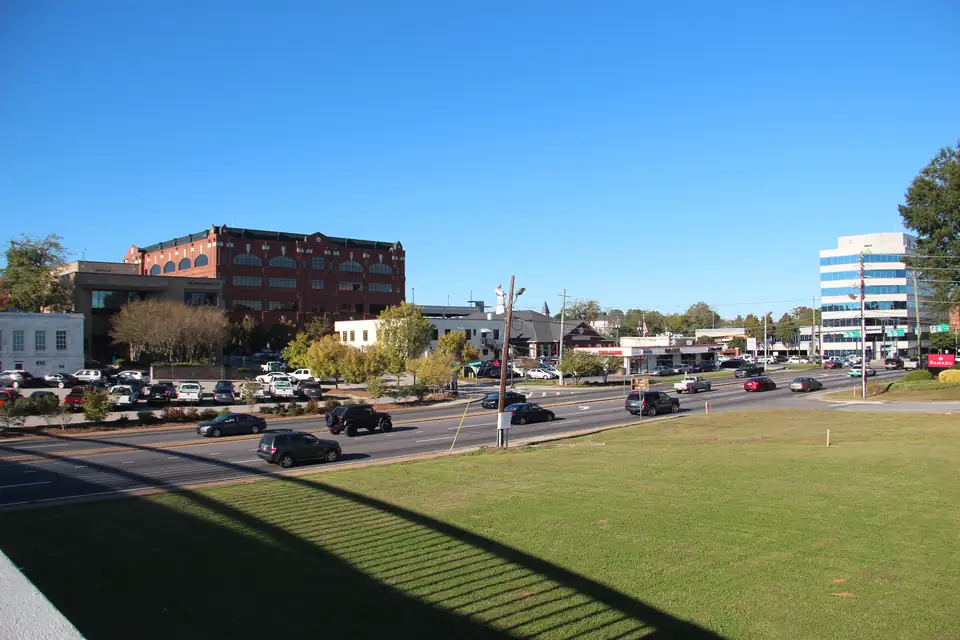
Gainesville was known as the “Poultry Capital of the World” by the end of World War II, and the State of Georgia has officially claimed that title since 1995, according to the New Georgia Encyclopedia. The industry has not left. On the Greater Hall Chamber’s 2025 list of the county’s largest employers, four of the top ten are poultry processors (Greater Hall Chamber). This piece sets out what the public record shows about that cluster and what Hall County documents about the things a food processor checks first. It does not guess at any company’s reasons.
Gainesville was known as the "Poultry Capital of the World" by the end of World War II, and the State of Georgia has officially claimed that title since 1995. (New Georgia Encyclopedia, checked Oct 19, 2026)
Where it started
In the late 1930s, local entrepreneur Jesse Jewell launched poultry raising, processing and distribution, which became northeast Georgia’s most important economic endeavor (New Georgia Encyclopedia). Today, Jesse Jewell Parkway is one of the crossroads at I-985 Exit 24 (OpenStreetMap).
The employers list, as the chamber publishes it
| Rank | Employer | Employees | Poultry processor |
|---|---|---|---|
| 1 | Northeast Georgia Medical Center | 11,417 | No |
| 2 | Gold Creek Foods | 4,000 | Yes |
| 3 | Hall County School System | 3,650 | No |
| 4 | Kubota Manufacturing of America | 3,540 | No |
| 5 | Fieldale Farms Corporation | 2,375 | Yes |
| 6 | Pilgrim’s | 1,760 | Yes |
| 7 | Hall County Government | 1,752 | No |
| 8 | Fox Factory | 1,600 | No |
| 9 | Mar-Jac Poultry | 1,300 | Yes |
| 10 | ZF Gainesville | 1,200 | No |
Source: the Greater Hall Chamber 2025 list. These are the chamber’s figures, not a payroll count we checked. We print ranks 1 to 10 only, because the rest of the list does not extract cleanly from the chamber’s PDF. More broadly, the chamber says Gainesville-Hall County is home to more than 330 manufacturing and processing concerns (Greater Hall Chamber).
What a processor checks, and what Hall County documents
Water and sewer
The Gainesville Department of Water Resources provides water and sanitary sewer service to Gainesville and Hall County residents (City of Gainesville). It operates the Lakeside and Riverside water treatment plants and the Flat Creek and Linwood water reclamation facilities (City of Gainesville), and the city said in July 2026 that it had grown to about 65,000 customers (City of Gainesville). Capacity figures come from the chamber, not the utility: water capacity of 35 million gallons per day for Gainesville, and wastewater capacity of 12 million gallons per day for Gainesville, 2.25 million for Buford, 400,000 for Flowery Branch and 375,000 for Lula (Greater Hall Chamber).
None of that says a given parcel has sewer, or enough of it. The document that answers that question for a site is a utility will-serve letter, which Hall County lists among its rezoning submittal requirements (Hall County packet).
Power and gas
The chamber says industrial and commercial users above 900 kVA can choose among Georgia Power, Jackson EMC, the City of Buford and Sawnee EMC (Greater Hall Chamber), and that natural gas options include Atlanta Gas Light, Liberty, the City of Buford and certified marketers (Greater Hall Chamber).
Rail and the port
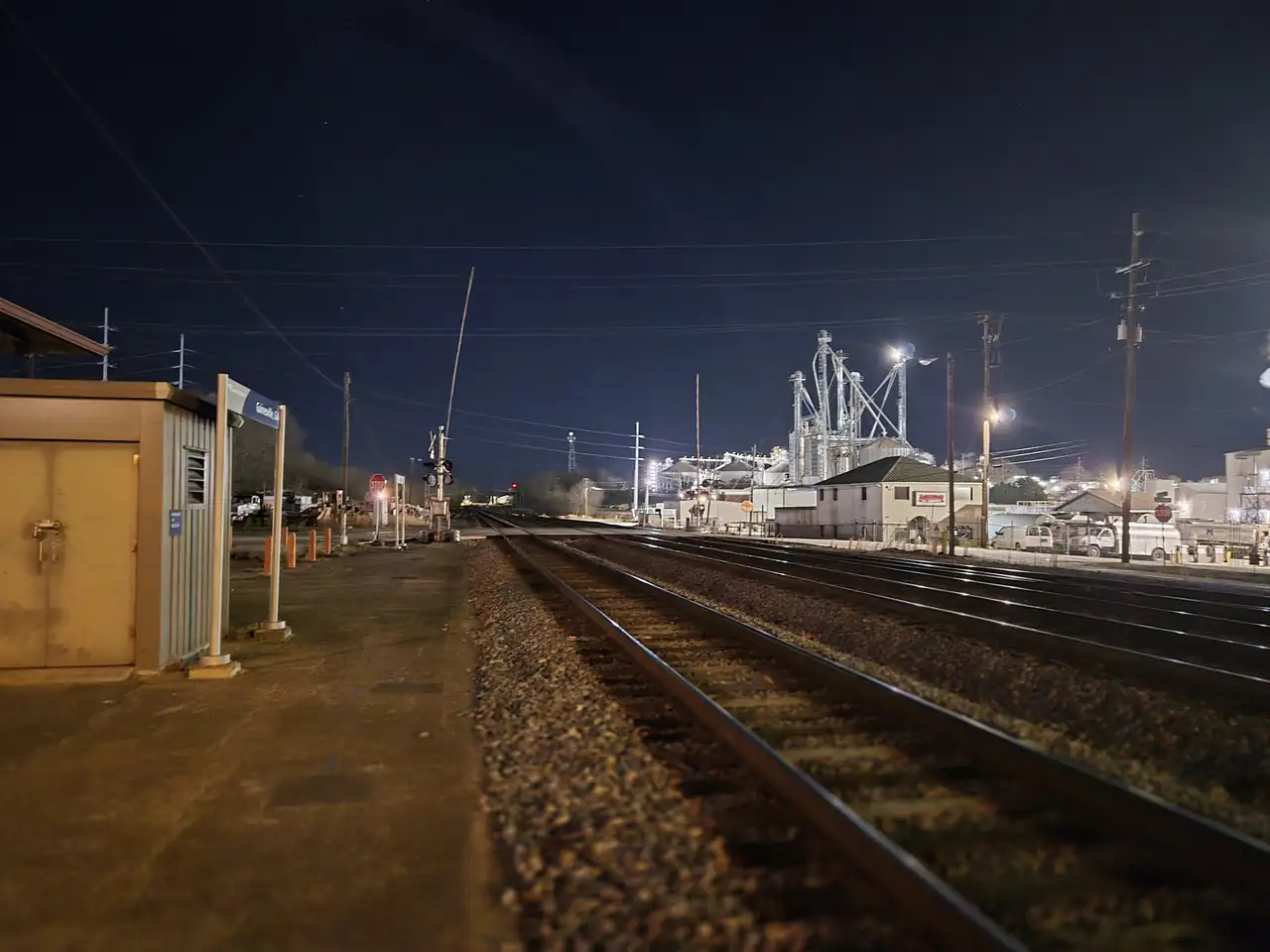
Norfolk Southern, CSX Transportation and Amtrak provide rail service in Hall County, per the chamber (Greater Hall Chamber). Since May 4, 2026, as reported, the Georgia Ports Authority’s Gainesville Inland Port has offered direct daily rail service to the Port of Savannah (AJOT); GPA’s fact sheet describes 24-hour direct rail service with Norfolk Southern. The chamber puts Savannah, the closest deep-water port, about 300 miles south via interstate (Greater Hall Chamber). For a shipper of perishable or frozen product, the useful questions are how far a site sits from the terminal and which roads the trucks would take; our port report sorts out which published figures describe opening and which describe full build-out.
Zoning that names processing
Hall County’s I-2 Heavy Industrial district is for heavy industrial uses involving extensive manufacturing, processing or assembly that require large tracts of land (Hall County UDC). Inside Gainesville, the H-I Heavy Industrial district restricts off-site impacts such as odors, dust, fumes, noise and vibration (Gainesville ULDC). The county’s most recent industrial rezoning shows how specific it gets: when commissioners approved the Danji site on White Sulphur Road on September 10, 2026, the conditions held the land to Light Industrial uses except that Tract 2 may allow animal processing, packing, treating and storage (Hall County minutes). That says nothing about who will use the site. It does show that processing is written into approvals use by use, so read the conditions, not just the district.
Incentives and labor, as reported
The chamber says Hall County offers a 100% freeport inventory exemption, with annual filing, for raw materials, goods in process and qualifying finished goods (Greater Hall Chamber). Georgia’s Department of Community Affairs ranks Hall County 148th, a Tier 4 county, in its 2026 Job Tax Credit rankings (Georgia DCA). For labor, the Bureau of Labor Statistics reports a preliminary, not seasonally adjusted unemployment rate of 2.8% for the Gainesville metro in August 2026 (BLS) and a labor force of 111,582 (BLS).
What the record does not show
We found no primary source that counts poultry plants in Hall County, measures their output or explains why a particular company stayed or expanded. The defensible statement is narrower: the title is the state’s, the history is documented, and four poultry processors sit on the chamber’s 2025 top-ten list. Anyone siting a food plant should verify utilities, zoning and conditions parcel by parcel; our industrial guide, the commercial land guide and the zoning and permitting guide walk through each check.
Questions people ask
Why is Gainesville, GA called the Poultry Capital of the World?
Gainesville was known as the Poultry Capital of the World by the end of World War II, and the State of Georgia has officially claimed that title since 1995, according to the New Georgia Encyclopedia.
Source: New Georgia Encyclopedia, checked Oct 19, 2026
Who started the poultry industry in Gainesville?
In the late 1930s local entrepreneur Jesse Jewell launched poultry raising, processing and distribution, which became northeast Georgia's most important economic endeavor.
Source: New Georgia Encyclopedia, checked Oct 19, 2026
Which poultry companies are among Hall County's largest employers?
Four of the Greater Hall Chamber's top ten employers for 2025 are poultry processors: Gold Creek Foods, Fieldale Farms, Pilgrim's and Mar-Jac Poultry.
Source: Greater Hall Chamber, checked Oct 19, 2026
Who provides water and sewer in Hall County?
The Gainesville Department of Water Resources provides water and sanitary sewer service to Gainesville and Hall County residents. Whether a specific parcel is served is a question for the utility, usually answered with a will-serve letter.
Source: City of Gainesville, checked Oct 19, 2026
Can large industrial users choose their electric provider in Hall County?
The Greater Hall Chamber says industrial and commercial users above 900 kVA can choose among Georgia Power, Jackson EMC, the City of Buford and Sawnee EMC.
Source: Greater Hall Chamber, checked Oct 19, 2026
Written by the Gainesville GA Commercial Real Estate Editorial Team. AI tools help us draft; people check every fact against its source before it publishes.